- As the year comes to a close, we hope you’ll think of us.
 What your support made possible this year. by Dr. Jonathan Clancy, Executive Director Dear Friends, We’ve had a pretty amazing year at the Stickley Museum at Craftsman Farms and are looking forward to accomplishing even more in 2026. Your support helped us: Understand that none of this happens without you: …
Continue reading “As the year comes to a close, we hope you’ll think of us.”
- “Full Circle”: An Invitation from the Executive Director
 “Full Circle”: An Invitation from the Executive Director By Vonda Givens, Executive Director When I began this job in 2008, Jan Wells, a Trustee at the time, mentioned a trip to Bryn Athyn, Pennsylvania, that had been organized as a Farms Afield by the museum. It was the first time …
Continue reading ““Full Circle”: An Invitation from the Executive Director”
- Caught in the Net: Notes from the Director’s Chair
 Caught in the Net: Notes from the Director’s Chair By Vonda K. Givens, Executive Director “The community spirit puts in ones soul the doing of what is right because fairness, reason and justice say it should be so.” “A Visit to Craftsman Farms,” by Raymond Riordan.The Craftsman, Nov. 1912. I’ve been …
Continue reading “Caught in the Net: Notes from the Director’s Chair”
- Tunnel Vision: Notes from the Director’s Chair
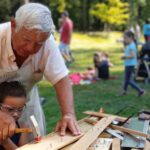 Tunnel Vision: Notes from the Director’s Chair By Vonda Givens, Executive Director “We urge handicrafts as a mean of physical and spiritual development ….when you buy a table or a chair you cannot buy with it the exhilaration of exercising your own creative faculties, the physical development, the peculiar mental …
Continue reading “Tunnel Vision: Notes from the Director’s Chair”
- Vacation Like Gustav Stickley!: Notes from the Director’s Chair
 Vacation Like Gustav Stickley!: Notes from the Director’s Chair By Vonda K. Givens, Executive Director I smile whenever I look at these canoeing photos of Gustav Stickley and his family, particularly the two of him and his wife Eda. I’m delighted by how relaxed and happy they look, wearing the …
Continue reading “Vacation Like Gustav Stickley!: Notes from the Director’s Chair”
- “Teddy Bounces to the Front”: Notes from the Director’s Chair
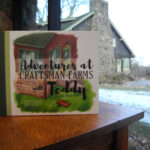 “Teddy Bounces to the Front”: Notes from the Director’s Chair By Vonda Givens, Executive Director Among the staff, we batted around the idea of a children’s book for years. The conversations began between former Executive Director Heather Stivison and I (back when I was the Director of Education). Although I …
Continue reading ““Teddy Bounces to the Front”: Notes from the Director’s Chair”
- Generation Alpha and Giving for the Future
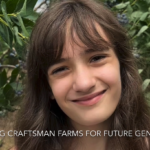 Generation Alpha and Giving for the Future Video Message by Avery Sanchez, age 11,Essay by Vonda K. Givens, Executive Director (age undisclosed) When I read Ted Lytwyn’s e-blast message Time Flies When You’re Having Fun (click here to read Ted’s message), I realized I had my own “time flies” moment recently when I …
Continue reading “Generation Alpha and Giving for the Future”
- Your Support Matters: A Note from Ted Lytwyn on the Reverse Auction
 “Time Flies When You’re Having Fun!” I’ve carried this phrase with me for most of my life. It’s so pertinent to my present situation (getting old) and to the Stickley Museum’s journey. Where has the time gone? On a personal level, I can’t believe how old I am. I’ve been blessed with, for …
Continue reading “Your Support Matters: A Note from Ted Lytwyn on the Reverse Auction”
- Choosing the Right Light Bulb for your Mica Lamp Shade
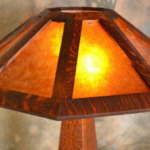 Choosing the Right Light Bulb for your Mica Lamp Shade Meghan Fletcher, Manager of The Craftsman Shop The 2 types of bulbs that can be used in the new Craftsman style lamps, designed by Philip Meyer of Ragsdale Home Furnishings, with mica shades are: INCANDESCENT BULBS and LED BULBS. INCANDESCENT …
Continue reading “Choosing the Right Light Bulb for your Mica Lamp Shade”
- Grand Re-Opening Coming Soon: Notes from the Director’s Chair
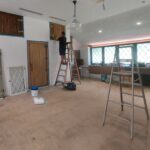 Grand Re-Opening Coming Soon: Notes from the Director’s Chair By Vonda Givens, Executive Director I can’t think of an autumn I’ve looked forward to more than the season coming up. This fall we will finally complete construction on the Annex rehabilitation and Log House Kitchen restoration, and their completion means …
Continue reading “Grand Re-Opening Coming Soon: Notes from the Director’s Chair”
- Staff Member Reflection: Simplicity For Me
 Our newest staff member, Samuel Calabrese, the museum’s Member & Visitor Services Coordinator, reflects on his past year at Craftsman Farms. Simplicity For Me By Samuel Calabrese, Member & Visitor Services Coordinator When Executive Director Vonda Givens asked me to write my first blogpost about what Craftsman Farms meant to me, …
Continue reading “Staff Member Reflection: Simplicity For Me”
- “Respect a Good Breakfast”: An Invitation from the Executive Director
 “Respect a Good Breakfast”: An Invitation from the Executive Director By Vonda Givens, Executive Director I’ll be honest. A diner breakfast is one of my favorite things about New Jersey. This is a surprising truth, given that, as a native Tennessean, I am a stalwart champion of the Southern breakfast: …
Continue reading ““Respect a Good Breakfast”: An Invitation from the Executive Director”
- The Craftsman Shop x Amy Brandenburg: Inlay Inspired Jewelry Now Available
 The Craftsman Shop x Amy Brandenburg: Inlay Inspired Jewelry Now Available Meghan Fletcher, Manager of The Craftsman Shop The Craftsman Shop is proud to present this timeless suite of jewelry, inspired by intricate inlay designs found in the Museum’s collection. Developed exclusively with Amy Brandenburg, a talented and well-known designer …
Continue reading “The Craftsman Shop x Amy Brandenburg: Inlay Inspired Jewelry Now Available”
- “How to Take a Break”: Notes from the Director’s Chair
 “How to Take a Break”: Notes from the Director’s Chair By Vonda Givens Executive Director I recently searched The Craftsman magazine on the University of Wisconsin-Madison Libraries’ website for a pithy quote on the subject of rest, but to my surprise, searching the word “rest” didn’t turn up much. I then tried …
Continue reading ““How to Take a Break”: Notes from the Director’s Chair”
- “Preservation Doesn’t Take a Holiday”: Notes from the Director’s Chair
 “Preservation Doesn’t Take a Holiday”: Notes from the Director’s Chair By Vonda Givens Executive Director Throughout 2023 the museum’s events have focused on preservation, and that focus has been primarily on major projects that are recent, ongoing, or upcoming. With the end of the year approaching, it struck me that …
Continue reading ““Preservation Doesn’t Take a Holiday”: Notes from the Director’s Chair”
- “Thinking in Reverse”: Notes from the Director’s Chair
 “Thinking in Reverse”: Notes from the Director’s Chair By Vonda Givens, Executive Director Dear Friends, Preserving a property like Craftsman Farms is not a solo operation. With a thirty-acre landscape and nine original buildings, the preservation of Craftsman Farms requires the hands, minds, and help of many individuals. It is …
Continue reading ““Thinking in Reverse”: Notes from the Director’s Chair”
- Protected: 2023 Member Exclusive Program ArchiveThis content is password protected.
- I Met a Yellow Daffodil
 I Met a Yellow Daffodil Kristen McCauley, Senior Manager of Education and Interpretation “When the bulbous plants break through the crust of winter, then Spring, evasive, whimsical and wild in her ways, cannot be gainsaid.” The Craftsman, March 1914. In early spring, the bright pink and yellow blooms of spring …
 - Protected: Log House Fireplace Restoration: A Panel Discussion
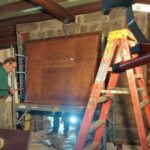 This content is password protected.
 - What Craftsman Farms Means to Me…
 With 2023 on the horizon, we are looking ahead to a new day at Craftsman Farms. Next year, we will fully re-open, for the first time since March 2020, with a newly rebuilt Annex and restored Log House Kitchen (generously funded by the Twp of Parsippany-Troy Hills and the Preserve NJ …
 - Protected: Celebrating the 50th Anniversary of the 1972 exhibition “The Arts and Crafts in America: 1876-1916”This content is password protected.
- The Craftsman Shop: Fall Feature
 Staff Pick: Yoshiko Yamamoto “100th Anniversary” Print Scarf By Vonda K. Givens, Executive Director When you have access to a shop in your workplace, especially one as nice as The Craftsman Shop, it can feel (at least for me) like a fringe benefit of the job. In fact, I have …
 - “The only reason for being a bee is to make honey. And the only reason for making honey is so I can eat it.” -Winnie The Pooh
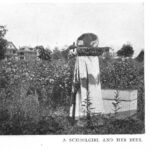 “The only reason for being a bee is to make honey. And the only reason for making honey is so I can eat it.” -Winnie The Pooh It’s officially fall, and around here that means the air is getting cooler (slowly), leaves are starting to change (eventually), and the honeybees …
 - Start with the Plumbing
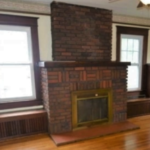 Start with the Plumbing By Vonda Givens, Executive Director An excellent plumber is infinitely more admirable than an incompetent philosopher. The society that scorns excellence in plumbing because plumbing is a humble activity and tolerates shoddiness in philosophy because it is an exalted activity will have neither good plumbing nor …
 - Collections News: Howe to Succeed In Business
 Collections News: Howe to Succeed In Business by Jonathan Clancy, Director of Collections and Preservation Using the metalwork aesthetic that Gustav Stickley was developing and promoting in the first decade of the 20th century, Benedict Studios rapidly transformed itself from a maker of silverplated goods into a manufacturer of domestic …
Continue reading “Collections News: Howe to Succeed In Business”
- December 2025 (1)
- August 2025 (1)
- June 2025 (1)
- April 2025 (1)
- March 2025 (1)
- December 2024 (1)
- October 2024 (2)
- August 2024 (2)
- June 2024 (1)
- May 2024 (2)
- March 2024 (1)
- December 2023 (1)
- September 2023 (1)
- June 2023 (1)
- April 2023 (1)
- March 2023 (1)
- December 2022 (1)
- November 2022 (1)
- October 2022 (1)
- September 2022 (2)
- August 2022 (2)
- July 2022 (2)
- June 2022 (1)
- March 2022 (1)
- February 2022 (2)
- December 2021 (1)
- October 2021 (3)
- August 2021 (1)
- November 2020 (1)
- October 2020 (2)